Changelog
-
1. Sep 2026
Changes to Wreck and Carcass Salvage Rules in Protected Zones
Zones with new-player protection can no longer salvage Evil wrecks and carcasses unless they participated in destroying them.
-
24. Aug 2026
Bulk Cargo Management
Bulk selection of currently displayed items has been added to the cargo hold.
Selected items can now be embarked onto a spacecraft or disembarked into station storage at once. The system checks the available cargo capacity beforehand.
-
21. Aug 2026
New Daily Rewards System
A new consecutive daily rewards system has been added, including a preview of rewards for the upcoming days.
Rewards may include Credits, Morale, cards, and Zone Points. Zone Points are awarded only to players who are members of a Zone.
The next reward can be claimed from midnight on the following day. If the sequence is interrupted for too long, the daily reward streak will end.
-
20. Aug 2026
Morale as a Source of Zone Points
Players can now convert their Morale into Zone Points according to the current conversion rate.
The resulting Zone Points are credited to the player’s Zone and can be used for its development, enhancements, or transfers between Zones.
-
19. Aug 2026
Zone Enhancements Market Expanded
The Zone Market has been expanded with visual enhancements for the main station, Zone banners, member profiles, and spacecraft.
Some enhancements have several consecutive levels, and higher variants can only be purchased after obtaining the previous tiers.
Purchased enhancements can be enabled or disabled individually. Changes are automatically applied to the associated stations, spacecraft, and member profiles.
-
18. Aug 2026
Faster Game World Loading
The caching of frequently used game data has been expanded.
Stations, bases, objects, fleets, NPCs, trajectories, and Corporation and Zone logos now load faster.
Protection against simultaneous regeneration of the same data has also been added, reducing server load during periods of increased activity.
-
14. Aug 2026
Safer Zone Membership Management
An interface for applying to join a Zone has been added, and the process of leaving a Zone has been updated.
The Founder cannot leave while other members remain. The last member cannot leave while the Zone still owns unused Quanta.
When a player changes Zones, headquarters, permissions, relations, and related player data are now updated correctly.
-
14. Aug 2026
Zone Points and the Zone Enhancements Market
Zone Points have been added to the game. Zone leadership can obtain them by converting shared Zone Quanta at the current conversion rate.
The Founder and Delegates can send Zone Points to other Zones or use them to purchase enhancements from the new Zone market.
An option to burn all unused Zone Quanta has also been added. For security, every transaction is verified again when it is confirmed.
-
13. Aug 2026
Local Hero Card Adjustment
The Local Hero card no longer affects the amount of experience gained by stations.
Its duration has been extended from 7 to 12 days.
-
12. Aug 2026
Solar Intensity and More Accurate Energy
Energy production now accounts for the actual intensity of sunlight based on an object’s position along its trajectory.
Ship and station energy can no longer exceed maximum capacity. Automatic energy supplies for neutral stations have also been improved.
-
11. Aug 2026
Quanta Replace Player Experience
The previous player experience system has been replaced by Quanta. Every player earns Quanta through most in-game activities, and they represent the value created by player activity.
Part of the earned Quanta remains with the player, while another part is contributed to their Zone’s shared pool according to the publicly displayed contribution rate.
Players can convert their own Quanta into Station Experience for a selected station.
Individual player Quanta balances are private, while the Zone’s Quanta balance and contribution rate are public.
-
29. Jul 2026
Smoother Music Transitions
The music management system has been redesigned. Background music now transitions smoothly between the menu and gameplay without tracks overlapping or transitions being triggered repeatedly.
-
9. Jul 2026
Outspace 1.8.2
Version 1.8.2 brings complete Ukrainian localization to the entire game.
Server response is now up to 80% faster thanks to a new nearby-object lookup system.
Fog of War has been added, requiring players to actively explore the surrounding universe, and enemy AI decision-making has been redesigned.
Clearer protected-Zone rules allow PvP and non-PvP players to safely share one persistent universe.
-
2. Apr 2026
Reworked Tutorials
The Miner and Evil Slayer tutorials have been reworked. Tutorials can now be restarted and played repeatedly.
More will be added gradually.
-
26. Mar 2026
Item Price History and Availability
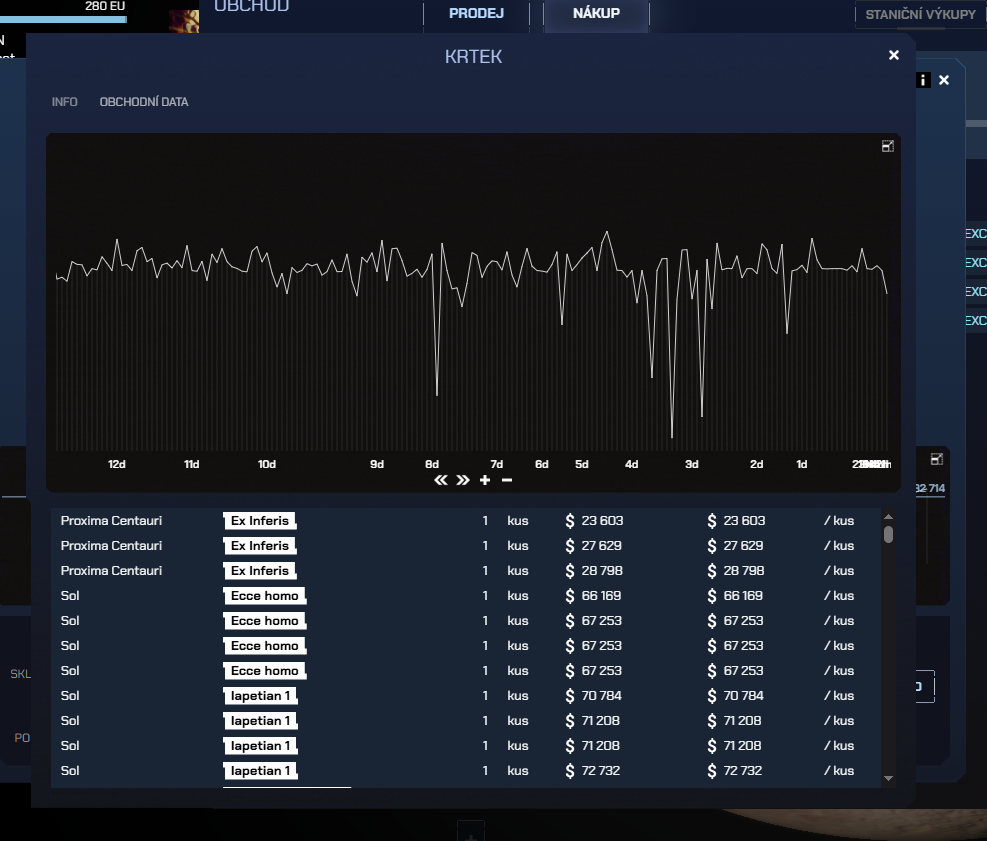
You can now view a more detailed price history for each item across the entire universe, as well as the locations where it is currently available for sale.
-
6. Mar 2026
Biomass Production Without Organic Material
Biomass can now be produced without organic material.
This function is provided by the LSS101 block as part of its recycler.
-
5. Mar 2026
Biorecycling Produces Ammonia
Biorecycling basic Organic Material C and corpses now produces ammonia.
Odyssea levels 8–10 can also process Organic Material B.
The Master of Workshops card can be converted into Advanced Manufacturing.
-
28. Feb 2026
Earth Supply Front Card Change
The card now pays 60% of the global price instead of the regional price.
The payout is capped at 50 million EXC.
-
21. Feb 2026
Moving Station Blocks
Individual station blocks can now be moved.
-
18. Feb 2026
New Colonist Aging System
The colonist reproduction and aging system has been redesigned.
The changes include a new inheritance calculation, a different method of finding partners, and more reliable aging calculations.
-
15. Feb 2026
Tutorial Restart
An option to restart a tutorial has been added to the game.
-
14. Feb 2026
Automatic Zone Assignment
A process has been launched that automatically assigns Zones to players who do not have one.
-
21. Jan 2026
Changes to Contract Packs
Contract packs obtained by completing tasks have been updated.
Cards are now more clearly divided by profession, and specializations for Manufacturers and Collectors have been added.
-
19. Jan 2026
Charging Rigs by Battery Quality
You can now set the minimum battery quality to use when charging rigs.
If the system cannot find a suitable battery, charging can be performed manually.
-
10. Jan 2026
New Outspace Logo
Outspace has a new official logo.
-
9. Jan 2026
Tutorial Card Restrictions
Cards obtained during a tutorial can no longer be exported, destroyed for Morale, or converted into other cards.
-
19. Dec 2025
Revision .52 and Faster Signals
Revision .52 fixes numerous bugs and improves game performance.
Signals now behave faster and more precisely, making them easier to locate.
Played cards are now displayed as complete cards instead of just their images.
-
15. Dec 2025
Search Engine in Source
A new search engine has been added to the Source documentation.
It automatically indexes content, splits phrases into tokens, and ranks results by relevance. It can also recognize whether a result is an in-game item or a text page.
-
11. Dec 2025
Zone Logos on Ships and Stations
Stations and ships now display the Zone logo instead of the player logo.
Zone images support transparency and can be updated for improved rendering.
-
9. Dec 2025
New Astronaut Log Style
Astronaut log entries are now translated into the language selected by the player.
The logs have a new style resembling records written by the shipboard AI.
-
8. Dec 2025
Quests Renamed to Contracts
The Quest card type has been renamed to Contract. This is only a name change; the game mechanic remains the same.
-
5. Dec 2025
Interstellar Hyperway
Hyperway has been redesigned again and now supports interstellar connections between star systems.
-
2. Dec 2025
Longer Hyperways and More Realistic Energy
Hyperways can now be up to 2 light-years long.
The required-energy calculation has been updated to be more realistic and now uses quadratic equations.
-
25. Nov 2025
Redesigned Raid System
Raids have been completely redesigned to improve game performance.
They are now sorted by time, with the nearest raid at the top, followed by other targets in the same Zone.
-
19. Nov 2025
Warp Travel Calculation Fix
A bug in the warp travel duration calculation has been fixed. Ship thrust no longer affects travel time.
Warp travel now takes the same amount of time over the same distance; differences in mass affect only the energy requirement.
After the fix, warp travel times are shorter overall.
-
5. Nov 2025
Smoother Movement of Ships and Objects
The new version improves the dynamics and smoothness of ships and other objects moving through space.
-
29. Oct 2025
Fighters Can Follow and Defend Other Air Units
Fighters can now follow or defend other air units.
-
19. Oct 2025
More Precise Block Selection on the Bridge
The bridge now allows more precise selection of even very small blocks on extremely large stations.
-
18. Oct 2025
Right-Side Panels Stay Open
Panels such as Production [W], Crew [C], and Cargo [L] no longer close or refresh when switching to the map and back.
These panels can now also be opened with keyboard shortcuts directly from the map.
-
18. Oct 2025
Waypoint After Ship or Station Destruction
When a ship or station is destroyed, a waypoint is automatically created at the location where it happened.
-
17. Oct 2025
Astronaut Level Now Affects Crew TES
The Crew TES calculation now includes a bonus based on the astronaut’s level.
-
15. Oct 2025
/discord Command in Chat
The /discord command has been added to the in-game chat. It returns a link to the game’s official Discord server.
To quickly send someone a Discord invitation, simply use this command instead of explaining where to find the link in the game.
-
13. Oct 2025
Object Pickup with [G] and Satellites
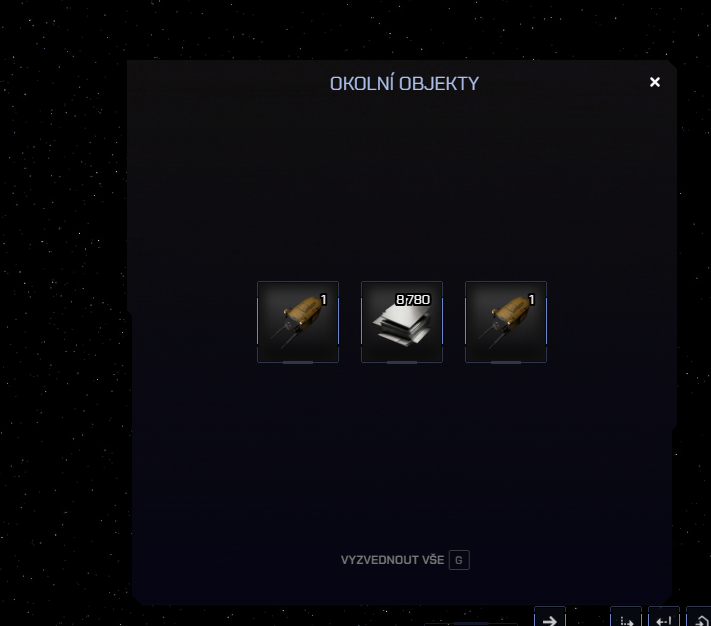
I updated autoGrabbing: pressing [G] now displays a selection of what to pick up. Pressing [G] a second time picks up everything as before.
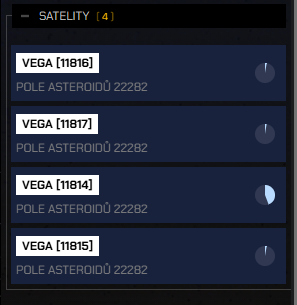
Satellites that charge rigs now display charging countdowns and are numbered for easier identification. I also fixed several rendering issues.
-
10. Oct 2025
Zone Membership Contribution Settings
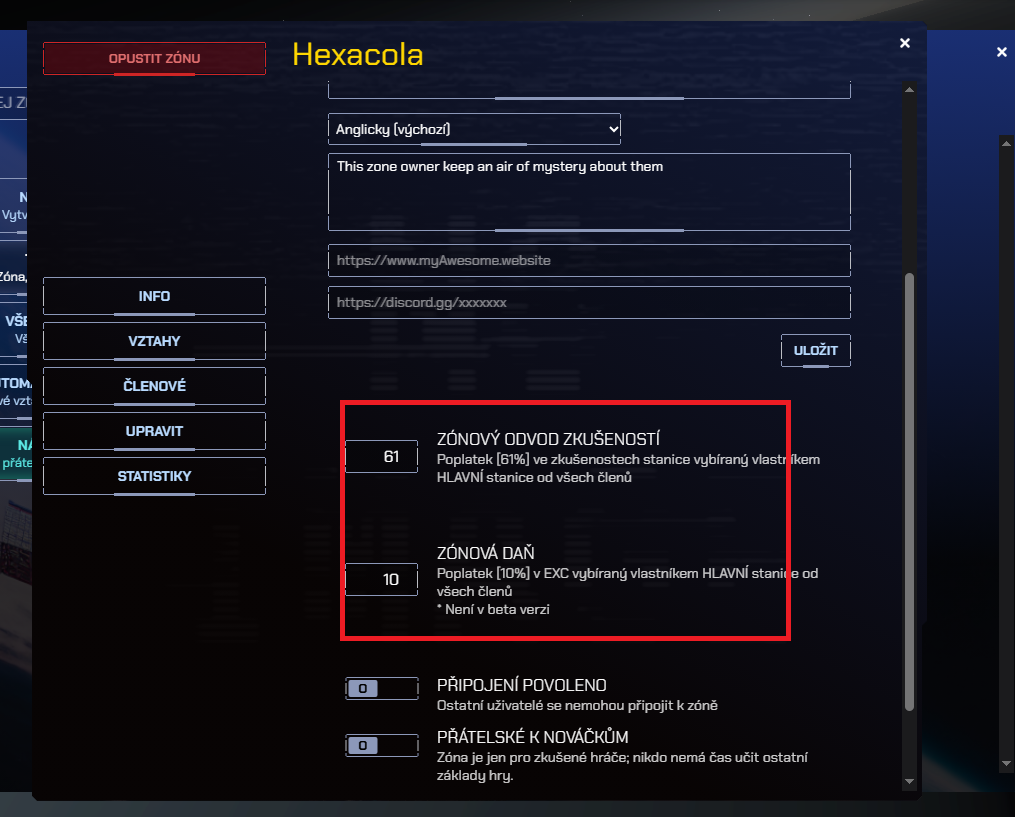
I added an option for each Zone to set the percentage of experience contributed to its headquarters. The default value is 50%.
-
10. Oct 2025
Zone Membership Changes
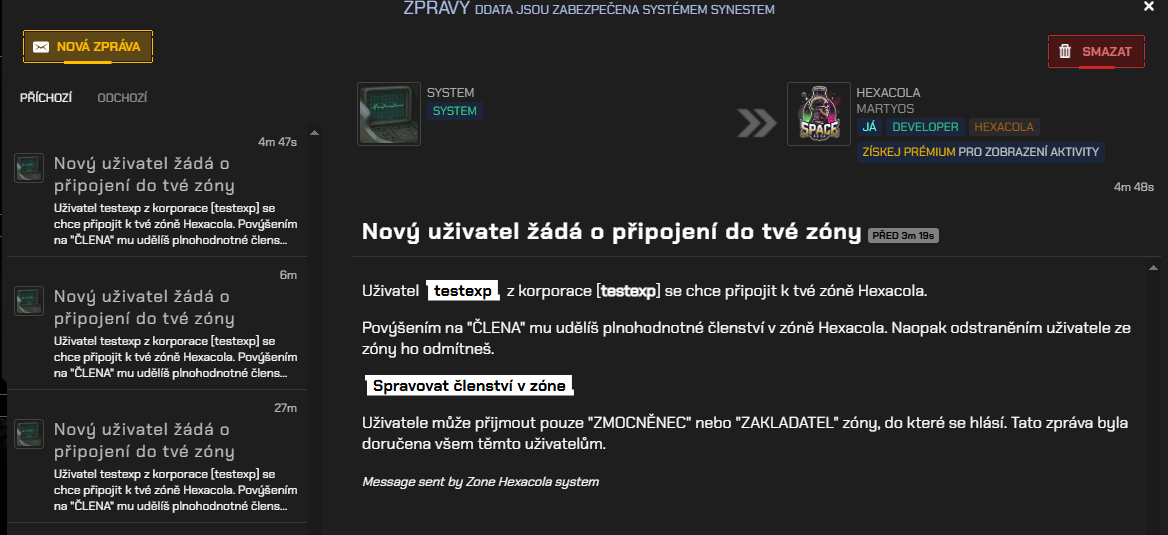
The Envoy role has been renamed to Delegate. This is only a name change.
When someone applies to join a Zone, all DELEGATES and the FOUNDER receive a message. The applicant (CANDIDATE) also receives a message when accepted or rejected. A message is also sent when someone is removed from the Zone.
-
4. Sep 2025
Major Change to Station Experience Calculation
Previous system:
- All Station Experience went to the headquarters (main station), even if it was not yours.
- If you were a member of another Zone, your own stations received no experience.
- If the Zone had no headquarters, the experience was lost.
New system:
- If you own a station: X% of the experience goes to the headquarters and Y% remains with your station. Each Zone sets this ratio independently.
- If you do not own a station: X% goes to the headquarters.
- If you own multiple stations: the X% share is assigned to the station where the Headquarters card is active. If it is not active anywhere, the share goes to your oldest station.
- If you own the Zone headquarters, it receives 100% of your experience.
- If your Zone has no headquarters, the experience goes to your station.
- If the Zone has no stations, the experience is lost and all members receive a warning.
- If you are not a member of a Zone and do not own a station, the experience is also lost and you receive a warning.
-
29. Aug 2025
Delay Removed When Drawing Cards from the Deck
I removed the delay when drawing cards from the deck.
-
6. Aug 2025
New Planet Shaders
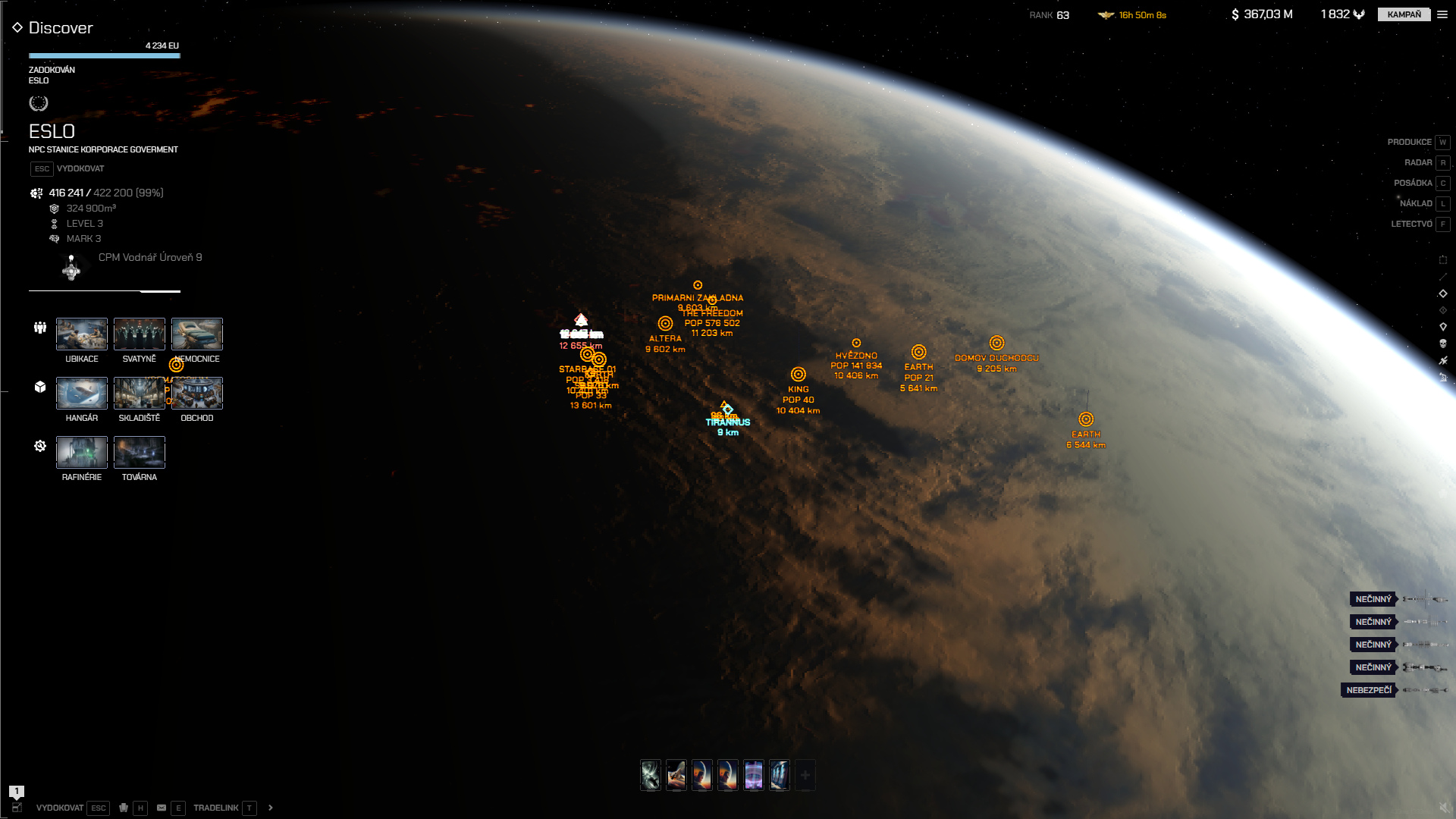
I reworked the planet shaders. They are still being tested, but they should be faster. I also added a sunset transition and made the clouds more three-dimensional.
-
5. Aug 2025
Buy Orders
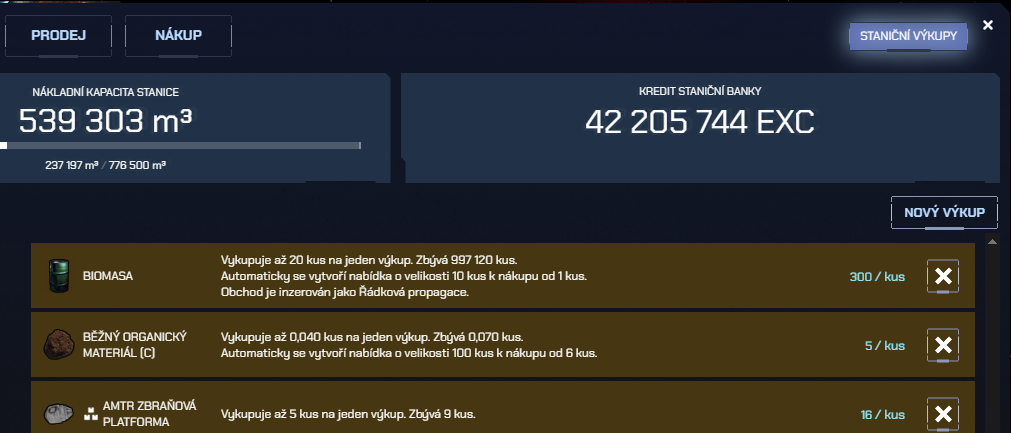
You can now choose what you want to buy automatically from other players. Any matching offer placed on the station market will be purchased immediately, provided you have enough $ in the station bank.
A sell offer can be created automatically from a buy order. Your station can therefore operate as a fully automated trading post, earning money while providing a useful service to other players.
I believe this mechanic opens up a new style of gameplay for haulers.
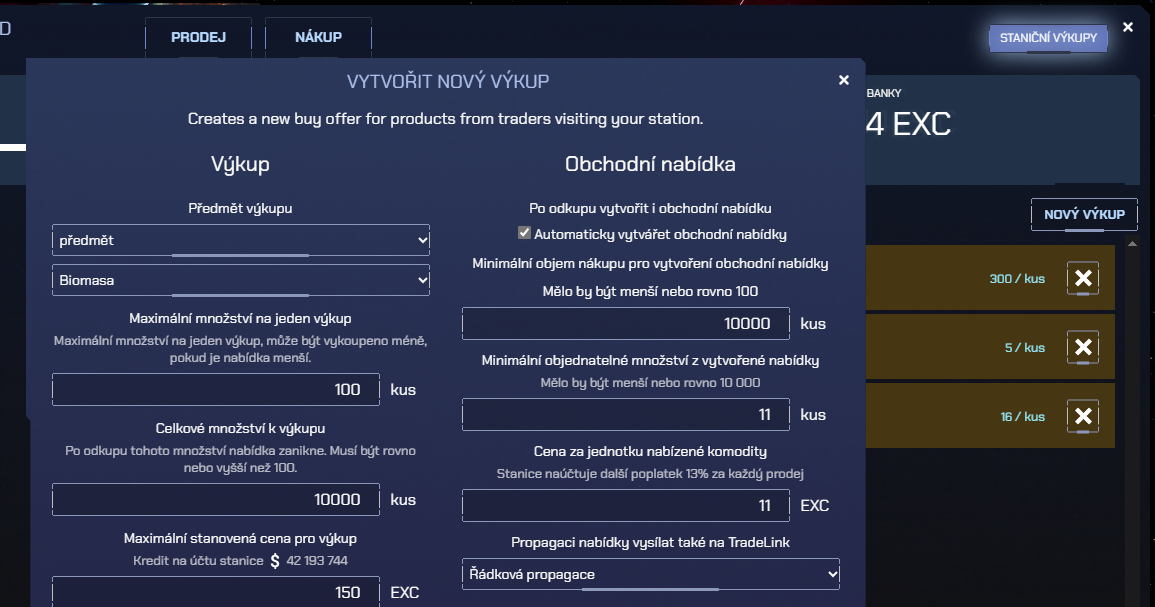
- Set the prices you are willing to pay at your station so sellers can find you.
- Create a sell offer from the purchase, perhaps at a slightly higher price.
- Find someone selling cheaply and someone else buying at a higher price. Buy, haul, and sell.
- You receive the credits immediately.
-
16. Jul 2025
Sound and User Interface
- The game menu now supports sorting star sectors.
- Contract cards now allow you to locate containers or decline missions remotely.
- The sound system has been completely redesigned. Sounds are now played spatially relative to the camera, with their frequency range and volume changing according to distance.
- Many previously missing sounds have been added to the game.
-
30. May 2025
Locations
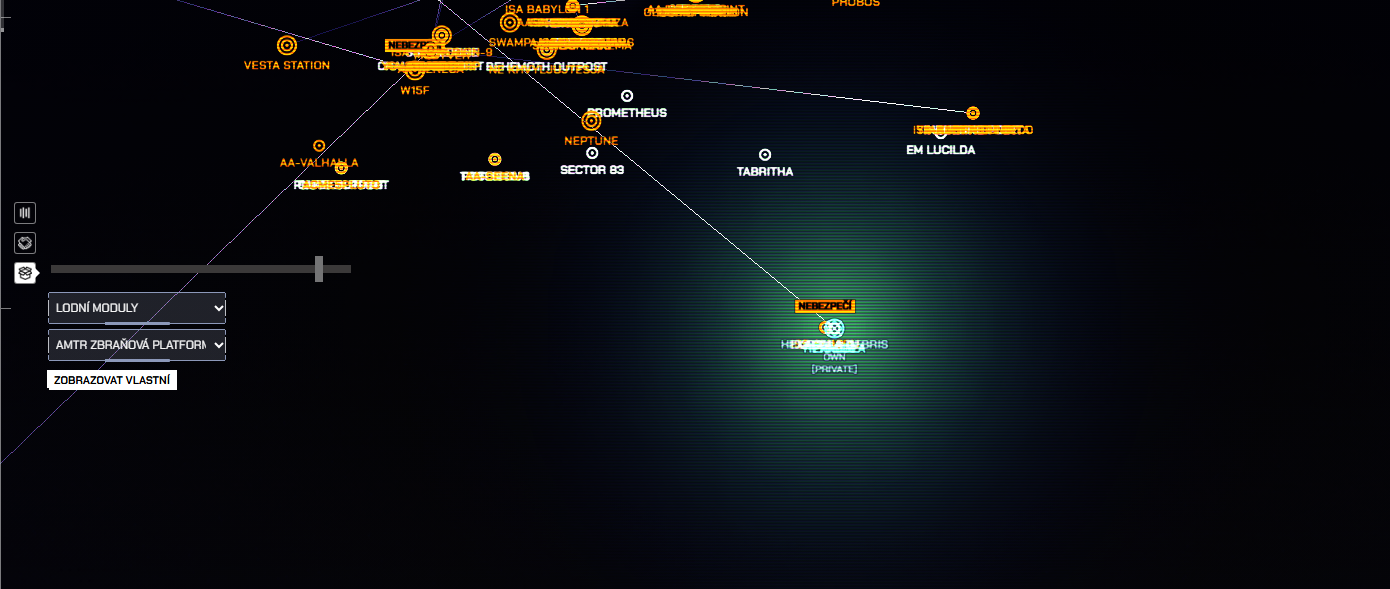
I added a new mechanic to the game: random locations. More types will be added and refined over time.
For now, you can discover:- Habitat: A place where you can purchase an astronaut.
- Observatory: Gives you a card or reveals the location of a hidden treasure site.
- Treasure: A place where you can obtain valuable rewards.
- Ruins: Choose which commodity you want to try to salvage from the ruins. It involves risk.
- Deck Master: Casts a card on your crew.
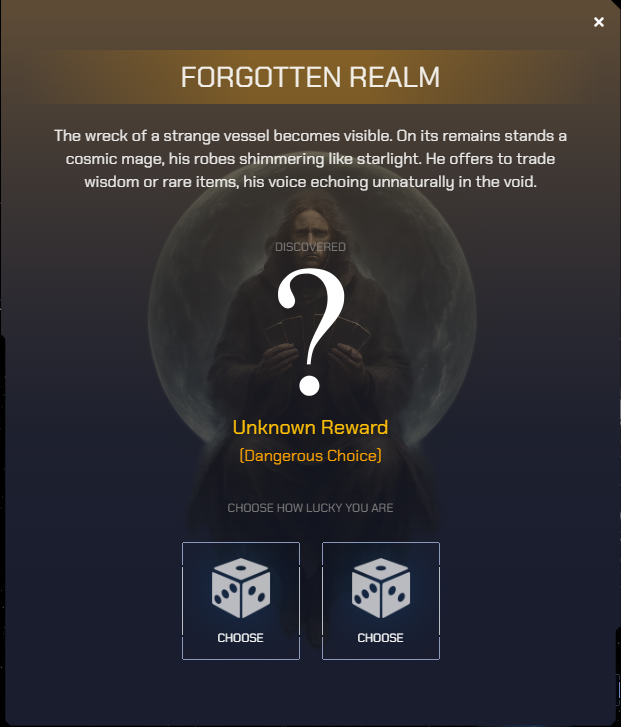
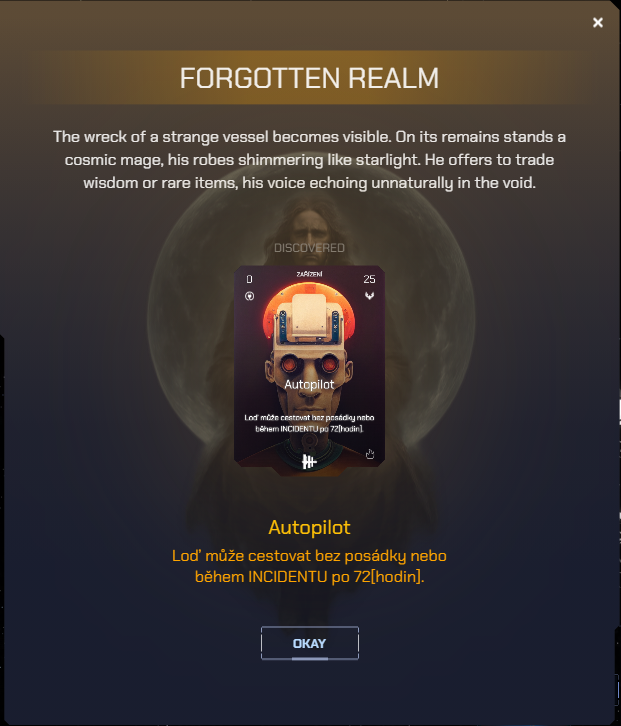
- Riddler: Offers hidden choices. You may gain something or lose something.
-
20. May 2025
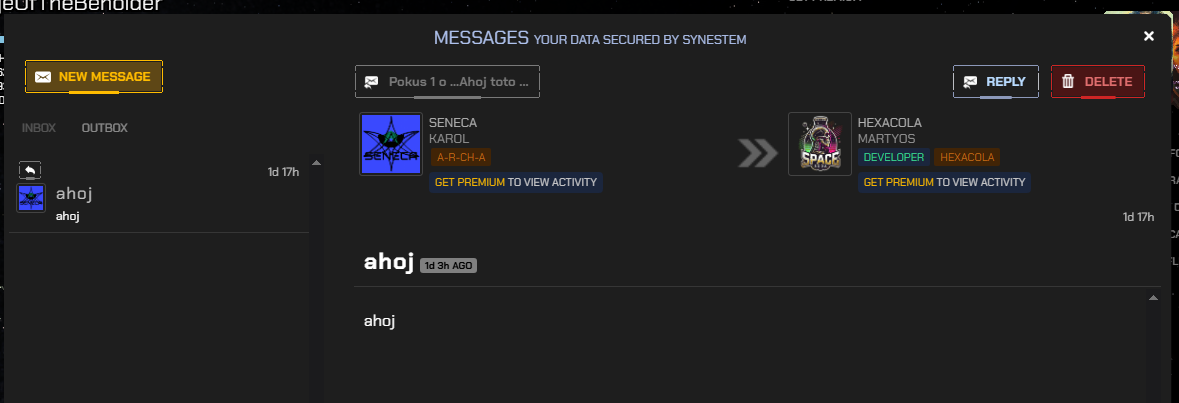
We Can Send Messages
Outspace continues to improve, this time in communication. A long-requested feature is here:
User Messages
We have been testing it with a small group for some time, and it appears to work well.
How it works:
- New players can reply to messages.
- "Verified" players can start conversations and send messages to anyone.
I also added information such as Zone membership and permissions to player accounts, making it harder for someone to impersonate an administrator.
Note: Messages give Zone admins considerable power, so use them responsibly.
-
14. Apr 2025
Maximum TES Utilization Limit for Spaceship Workstations
I added a maximum TES utilization limit to spaceship module workstations. When selecting an astronaut, the minimum TES value now also displays a "MAX" value. Any Crew TES above this limit is not counted. This applies to downloading signals, firing weapons, and all other activities involving Crew TES.
-
10. Apr 2025
New Version Focused on Quality-of-Life Changes
I made changes across many parts of the game to make it significantly easier to use:
- Redesigned trading interface.
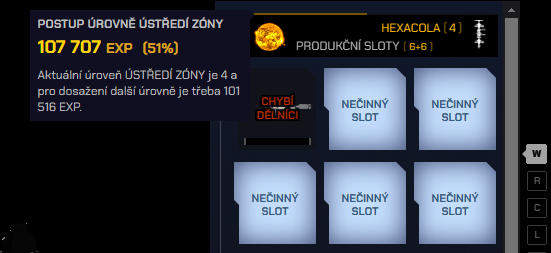
- A clearer overview of the experience status at the Zone headquarters.
- The ship’s name is now displayed in the browser tab.
- A new interface for charging ship energy.
- You can configure who may charge a ship at a station: Zone members, allies, everyone, or no one.
- The TES of robots sold at NPC stations now increases with station evolution, similarly to astronaut TES.
- If a warping ship runs out of energy during its journey, it no longer remains stranded. Once it recharges the minimum energy required for the next warp, it jumps forward and continues this process until it reaches its destination.
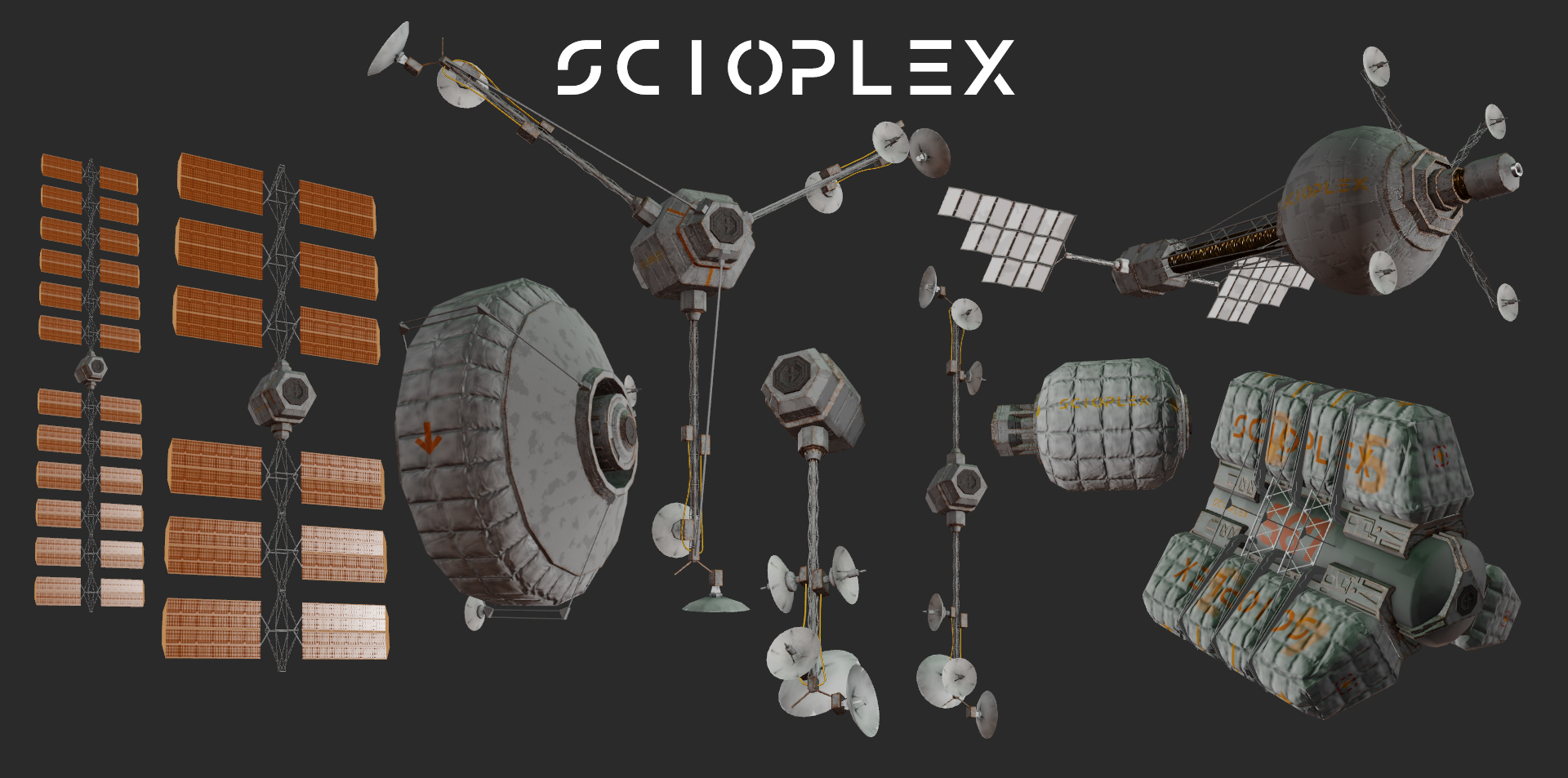
- Many new SCIOPLEX module types designed for deep-space travel are now available on the market.
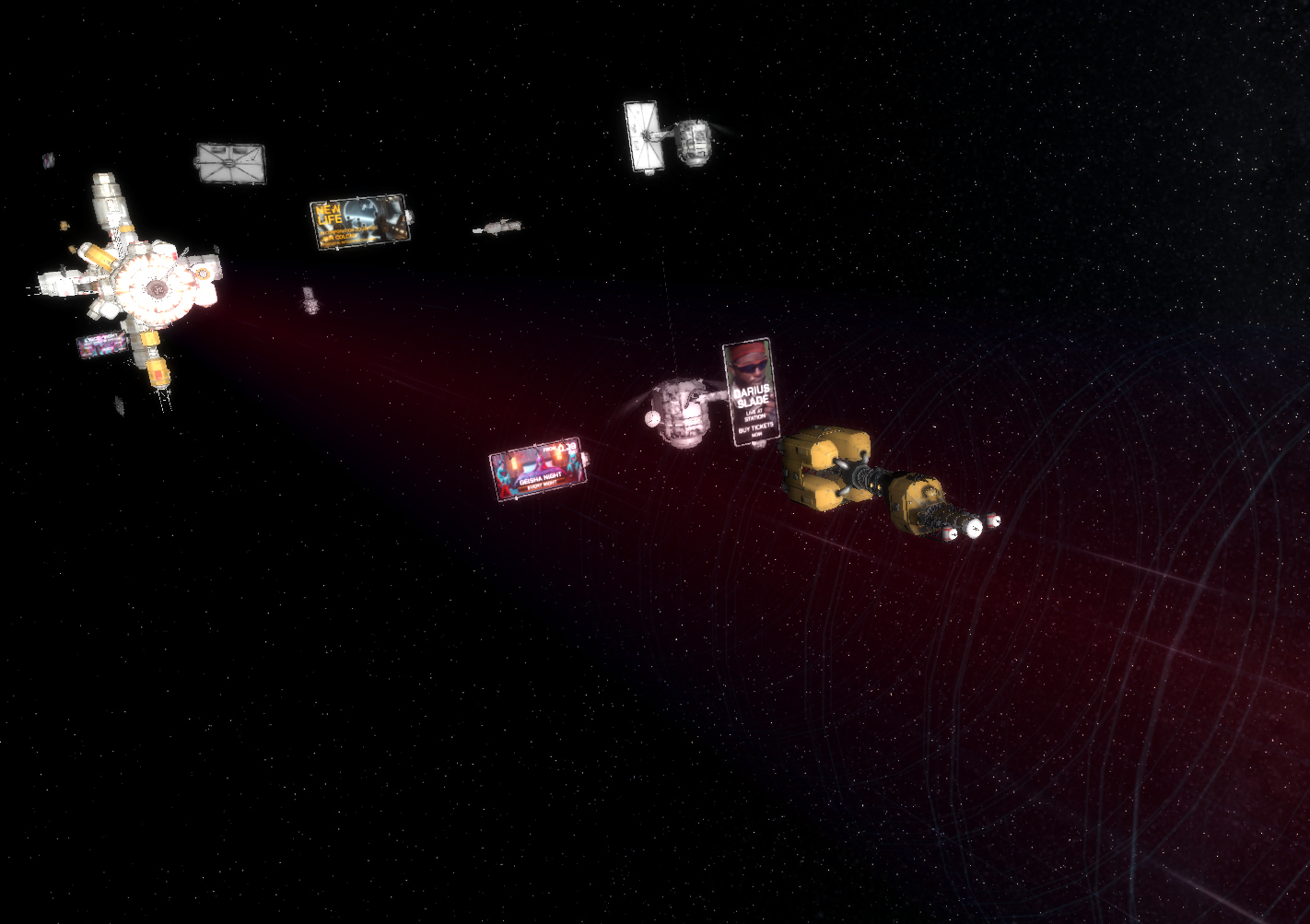
Many new SCIOPLEX module types designed for deep-space travel are now available on the market.
I made the long-promised changes to object access permissions:
Previous rules
- Only your own objects and public white objects were visible.
- Only the owner was allowed to open and collect an owned object.
- Neutral objects could be collected by anyone.
Current rules
- All players can now see all objects.
- Neutral white objects can be collected by anyone.
- The owner may collect any of their objects regardless of location.
- If an object is within its owner’s Zone sphere of influence, only the owner may collect it.
- If an object is outside its owner’s Zone sphere of influence and lies within another Zone, any player whose Zone reaches that location may collect it.
I redesigned how the game handles card data and card management in general. This also changes how cards are sorted in the deck.
Each card now shows how many copies are available and where they are stored, and cards can be searched quickly. The top section also displays each player’s most frequently used cards for quick selection.
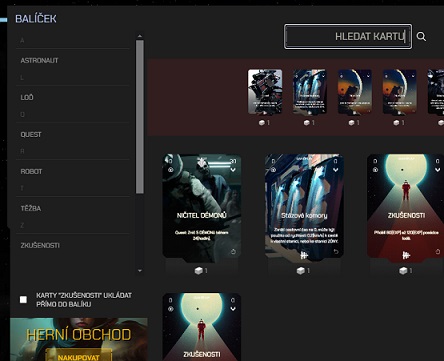
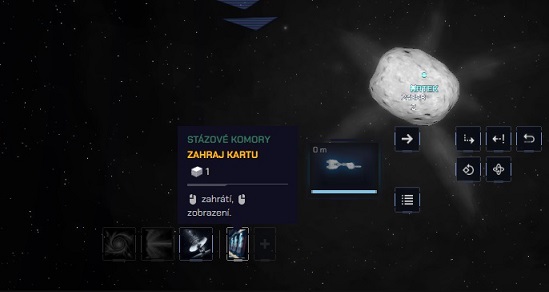
I added the ability to place several cards in the quick-access bar at the bottom of the screen, keeping them within easy reach. If a card is not in your hand, clicking its icon draws it from the deck and plays it immediately. The Morale cost remains unchanged.
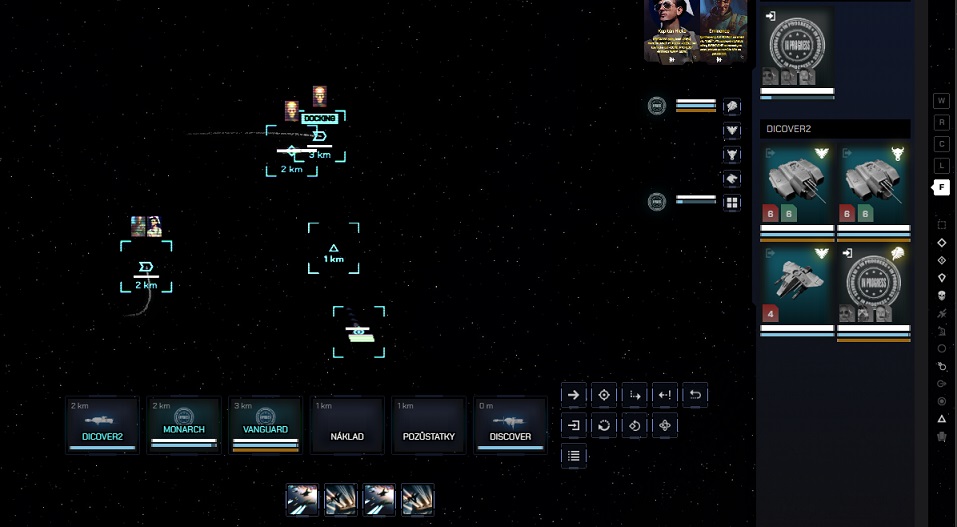
- Ships no longer stop working at random. AI-controlled ships now run reliably and operated continuously for two days during testing. I expect them to remain functional for as long as the server is running.
- The hangar ship list now also shows ships that are not currently in the hangar, displayed in gray. You can call them directly from this window.
- When multiple ships are selected, empty hangar slots are hidden, making the available ships easier to review.
- When multiple ships or ships other than the mothership are selected, you can now assign crew and organize them into fleets. This allows complete hangar management for all ships at once and the deployment of fleets containing multiple ships.
- The AI has been optimized. It is faster and transmits less data, so larger battles should run more smoothly. I would like to test a 100-versus-100 battle.
- If a patrolling ship runs out of fuel, it returns to refuel. Once it reaches 50%, it resumes its task. A ship defending a station will therefore keep returning to its patrol until it is destroyed.
- If a ship loses more than 70% of its health, it automatically returns to the dock.
- After refueling and restocking ammunition, a ship resumes its task only if the target still exists and has not moved out of range or been destroyed.
I have added the final major game mechanic affecting biomass and organic material.
Until now, Organic Materials A, B, and C, as well as biomass, were largely overlooked as waste. As you may have guessed, there has always been a reason these materials existed from the beginning.
Organic material is produced by killing Evil units. The larger the unit, the more material it yields. The harder it is to kill, the rarer the material it drops. These materials could already be refined to extract resources, and that has not changed.
One of those resources was biomass. Until now, it had no use. That has changed.
Every newly born colonist now requires a certain amount of biomass, which they recycle throughout their lifetime. This produces the material needed to supply nutrients and fluids. Without the required amount, a colonist cannot be born. If a station runs out of biomass, its birth rate stops.
Don’t panic!
Biomass can be replaced by a less efficient resource: human remains. If a station lacks biomass but has human remains in its cargo hold, colonists begin consuming them. The advantage is that remains are produced when older colonists die, making the population reasonably self-sufficient even in your absence. However, the population cannot grow until you replenish the material.
The consequences of missing biomass are similar to those of a station reaching its accommodation capacity.
Organic material is now a valuable resource, especially for those who produce it as a by-product of their activities, including Slayers of Evil, traders, and collectors.
The English translation of this website has been completed. It currently contains around 80 pages of written content and many tools and simulators for game mechanics.
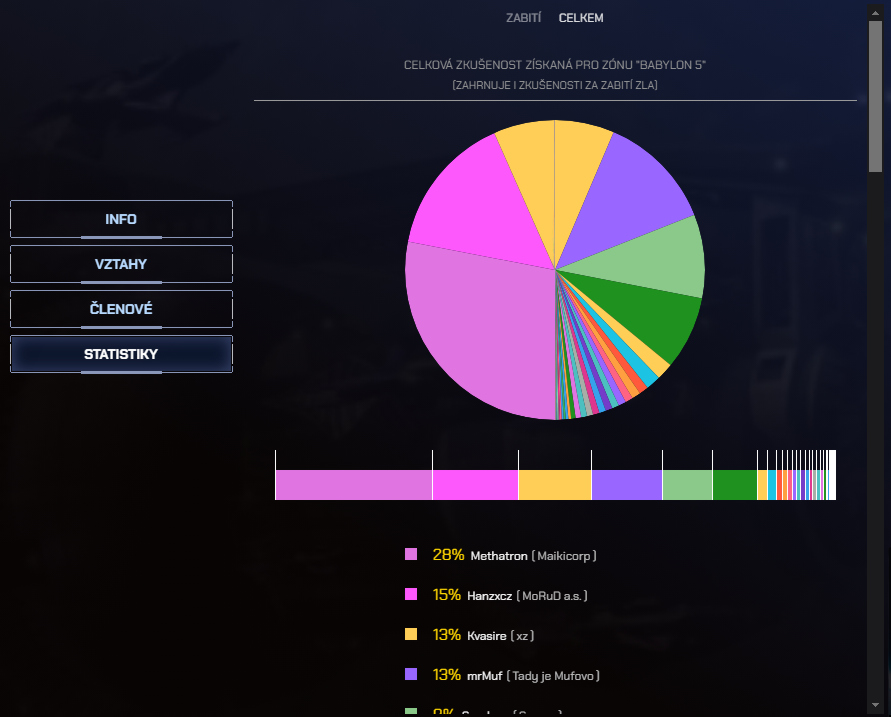
Every Zone now has visible activity statistics for its members.
Previously, these statistics were available only from the Zone headquarters bridge, meaning that only the station owner could see them. Now anyone can view them by finding a Zone and one of its members. The statistics also include members who have left or changed Zones.
This makes it easy to assess a player’s contribution, which can support a decision to accept them into a Zone or recognize their value as a member.
I discovered that the server was rounding small numbers to too few decimal places, turning 0.00015 into 0.002.
Why does this matter? The difference is multiplied by the quantity, for example when storing regolith whose volume is calculated per kilogram. With several tonnes, the difference in occupied storage volume becomes substantial.
As a result of this fix, some stored items may now occupy as little as one fifth of their previous volume.
Production slots can now be clicked to display the location where the activity is taking place.

NPC stations can now grow based on how players use them.
Whenever a fee is paid at a station, the station gains evolution points and gradually expands. Its storage capacity increases, it offers better astronauts and robots for sale, and much more. Learn more about station evolution at Corporation-Operated Stations.