
Swarm
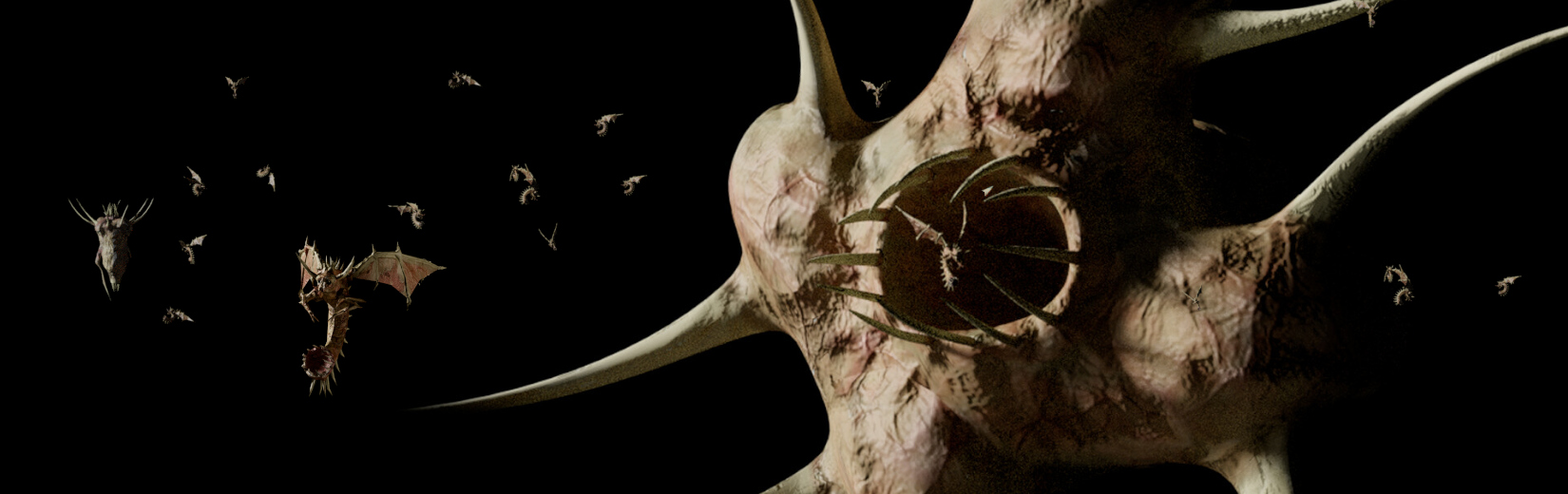
Nature of the Swarm
A swarm is the term used for the collective presence of individuals of Evil within star systems. It is not an organized structure nor a group led by a single entity. The swarm manifests as a unified whole, whose behavior emerges from the interaction of all present entities.
There is no fixed formation or permanent division of roles. The swarm changes over time, reorganizes itself, and reacts to events in space like a living organism.
Very often, the swarm’s behavior is influenced by its strongest entity, which is usually the Leviathan.
Perception of Space
The swarm maintains awareness of the surrounding system. It registers movement and changes in activity. It distinguishes between passive presence and a threat.
Some activities provoke no response, while others trigger an immediate reaction. The same situation can lead to different swarm behavior at different times.
Swarms collectively form an ecosystem and communicate with one another through Leviathans.
Response to Threats
When a swarm feels threatened, it alters its behavior. Individuals of Evil converge toward the point of disturbance.
In some cases, the swarm retreats or disperses if the situation is deemed unfavorable. A swarm attack appears coordinated, even though no commander is evident.
Behavior in Combat
During combat, the swarm adapts to the evolving situation. Its attention focuses on active targets, and its movement responds to losses and spatial changes. The swarm can sense impending danger and react to it, for example by escaping the impact zone of torpedoes or nuclear strikes. For this reason, launching such weapons from the shortest possible distance is most effective.
Hopeless positions are abandoned, and the loss of individual entities leads to reorganization. The destruction of a single unit can influence the behavior of the entire swarm.
Memory and Lifespan of the Swarm
The swarm demonstrates a capacity for short-term memory. Areas where conflicts occurred remain active longer than peaceful regions of the system. Repeated disturbances provoke stronger responses. As threats subside, activity gradually diminishes and disperses.
Human Influence
The swarm has no clearly defined boundaries or simple behavioral rules. The space it controls functions as a living ecosystem. Entering it disrupts the balance, producing both immediate reactions and long-term consequences.
